
ECG vs Echocardiogram
Understanding the differences between two of the most common cardiac investigations and how they help assess your heart health.
Introduction
If you have been experiencing symptoms such as palpitations, chest discomfort, dizziness, breathlessness, or simply want reassurance about your heart health, you may have come across two common cardiac tests: an ECG and an echocardiogram.
Many patients are unsure of the difference between these investigations and often ask which test is most suitable for their symptoms.
Whilst both tests provide valuable information about your heart, they assess different aspects of cardiac health and are often used together to build a complete picture.
What is an ECG?
An ECG (Electrocardiogram) is a quick, non-invasive test that records the electrical activity of your heart. Every heartbeat is controlled by electrical impulses, and an ECG allows clinicians to assess how these signals travel through the heart. The test can help identify abnormal heart rhythms, conduction abnormalities and other electrical changes that may require further investigation.
ECGs are commonly recommended for patients experiencing symptoms such as palpitations, dizziness, chest discomfort or blackouts. They are also frequently used as part of routine health assessments, occupational medicals and sports cardiac screening programmes.
What is an Echocardiogram?
An echocardiogram is an ultrasound scan that provides real-time images of the heart. Unlike an ECG, which assesses the heart's electrical activity, an echocardiogram allows clinicians to visualise the heart's structure and function, including the chambers, valves and pumping ability of the heart muscle.
The examination is commonly used to investigate symptoms such as breathlessness, chest discomfort, heart murmurs and reduced exercise tolerance. It can also help identify structural heart conditions, valve abnormalities and changes in heart function that may not be apparent on an ECG alone.
What about Holter Monitoring?
Whilst a resting ECG provides a snapshot of your heart rhythm at a specific moment in time, symptoms such as palpitations can often occur intermittently and may not be present during the recording.
Holter monitoring offers a more comprehensive assessment by continuously recording your heart rhythm over 24 hours, 48 hours or even several days. This significantly increases the likelihood of capturing rhythm abnormalities that occur only occasionally and can be particularly useful when investigating unexplained palpitations, dizziness or blackouts.
Not sure which test you need?
Choosing the most appropriate cardiac investigation can sometimes feel confusing, particularly when different tests assess different aspects of heart health.
An ECG, echocardiogram, Holter monitor and ambulatory blood pressure monitor each provide valuable information, and the most suitable investigation will depend on your symptoms and medical history.
At The Heart Clinic, we offer a Suitability Consultation to help determine which investigation, if any, may be most appropriate for you. The consultation fee is £50 and is fully deducted from the cost of any investigation booked following the appointment.
If you would like further guidance or wish to arrange an appointment, please contact The Heart Clinic today.
ECG vs ECHO: Key Differences
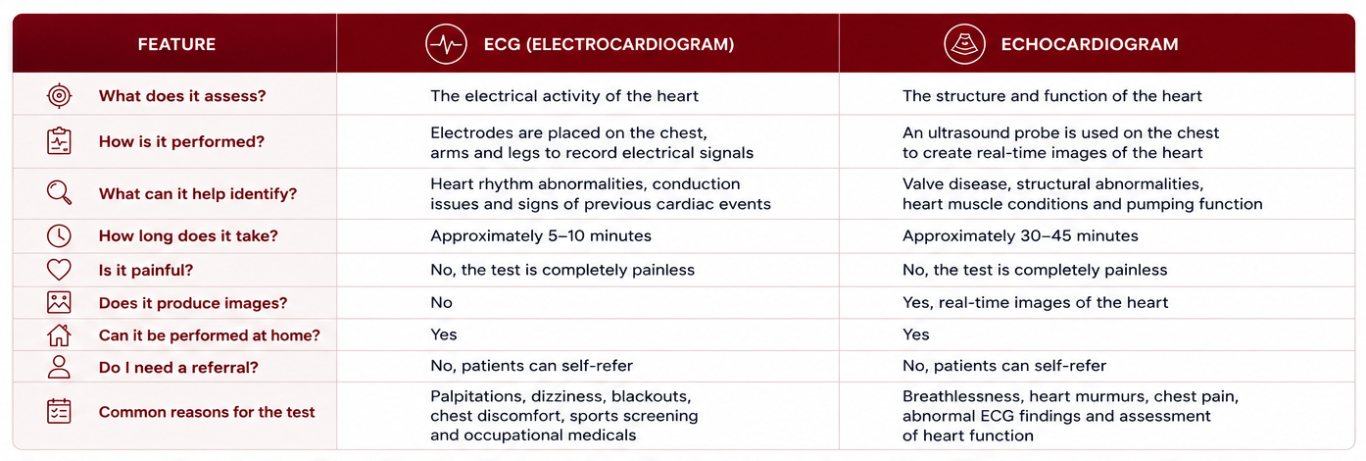
An ECG assesses the heart's electrical system, whilst an echocardiogram provides detailed images of the heart's structure and function. As the tests provide different information, they are often used together to build a more complete picture of your heart health.
Which Test Do I Need?
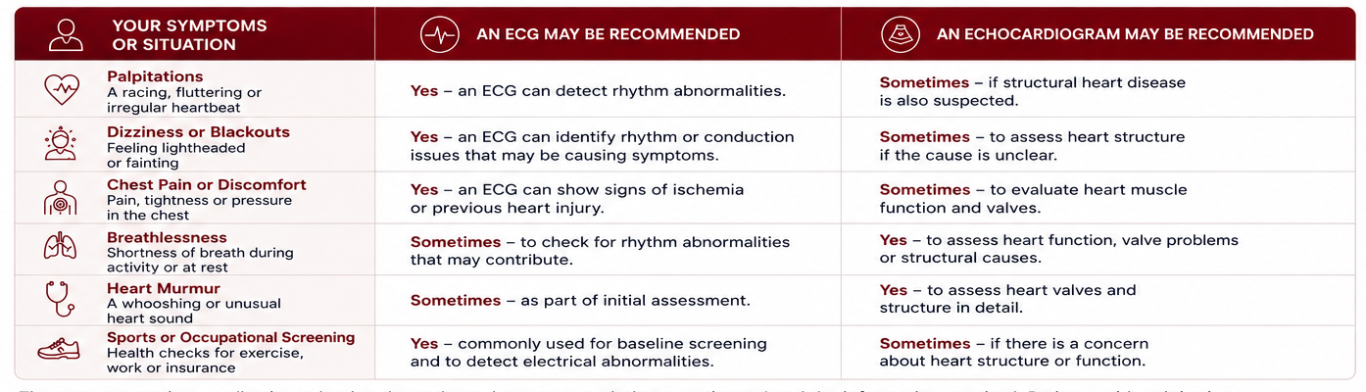
The most appropriate cardiac investigation depends on your symptoms and medical history. An ECG is often used to assess the heart's electrical activity and rhythm, whilst an echocardiogram provides detailed information about the heart's structure and function. In many cases, these investigations are complementary and may be recommended together to provide a more complete understanding of your heart health.
Related Articles

What Does an Echocardiogram Show?
Learn how an echocardiogram assesses heart structure, valve function and pumping performance, and discover what clinicians look for during the examination.
What Is a Holter Monitor and When Do I Need One?
Find out how continuous ECG monitoring can help investigate intermittent symptoms such as palpitations, dizziness and unexplained blackouts.
Investigating Palpitations: Which Heart Test Do I Need?
Explore the common causes of palpitations and learn how ECGs, Holter monitors and echocardiograms can help identify the underlying cause.
Book your appointment today!
Fast, reliable cardiac testing with quick turnaround, available across London, Luton, Bedfordshire, Hertfordshire and Buckinghamshire.
The Heart Clinic @ Optimized Body & Mind
7 Wellington St, Luton, Bedfordshire, LU1 2QH, UK
Available for: ECG, Holter, ABPM & Echocardiograms
The Heart Clinic @ 360 Med
120 Fortis Green Rd, Muswell Hill, N10 3HN, London, UK
Available for: ECG, Holter, ABPM & Echocardiograms
Prefer to speak to us?
Email: info@theheartclinicltd.co.uk
Call: +447853 215671