What are Palpitations?
Understanding the common causes of palpitations and how cardiac investigations can help identify what is happening with your heart.
Introduction
If you have been experiencing a fluttering, racing, or irregular heartbeat, you are not alone. Palpitations are one of the most common reasons people seek cardiac assessment, and whilst they are often benign, they can occasionally indicate an underlying heart condition that warrants investigation.
Many patients are unsure which test is most appropriate for their symptoms, or whether they need to be seen at all. This article explains what palpitations are, what can cause them, and how different cardiac investigations can help identify the underlying cause.
What are Palpitations?
Palpitations are the conscious awareness of your own heartbeat. They can present in a number of ways, including a sensation of the heart pounding, racing, fluttering, or skipping a beat. They may be felt in the chest, throat, or neck, and can last a few seconds or persist for several minutes.
Some people experience palpitations at rest, whilst others notice them during exercise, periods of stress, or when lying down at night. In many cases, they are entirely harmless. However, when palpitations are frequent, prolonged, or accompanied by other symptoms such as dizziness, breathlessness, or chest discomfort, a cardiac assessment is advisable.
What can cause Palpitations?
Palpitations can arise from both cardiac and non-cardiac causes. Common non-cardiac triggers include anxiety, caffeine, alcohol, dehydration, anaemia, thyroid disorders, and certain medications.
Cardiac causes that may require investigation include ectopic beats, which are premature contractions that produce a skipping or thumping sensation and are generally benign, though they can be symptomatic. Atrial fibrillation is the most common sustained cardiac arrhythmia and is characterised by an irregular, often rapid heartbeat. If left undiagnosed and untreated, it carries a significantly increased risk of stroke. Supraventricular tachycardia causes sudden episodes of rapid heart rate that typically start and stop abruptly. Ventricular arrhythmias are less common but more serious, originating in the lower chambers of the heart. In some cases, structural heart conditions such as valve disease or cardiomyopathy can also present with palpitations.
Because the underlying cause is not always apparent from symptoms alone, objective cardiac testing is essential.
When should you seek assessment?
A cardiac assessment is advisable if your palpitations are frequent or worsening, last longer than a few minutes, or occur during physical activity. You should also seek assessment if palpitations are accompanied by dizziness, breathlessness, chest pain, or fainting, or if you have a personal or family history of heart disease, a known heart murmur, or a previous abnormal ECG.
Even if your palpitations feel mild, it is always better to have them assessed and obtain reassurance than to leave a potential arrhythmia undetected.
Which test is most appropriate?
The most suitable cardiac investigation depends on how frequently your palpitations occur and whether they are present at the time of the test.
A resting ECG is typically the first-line investigation. It records the electrical activity of your heart in real time and can identify rhythm abnormalities, conduction issues, and other electrical changes. At The Heart Clinic, a 12-lead resting ECG can be performed quickly and non-invasively during your appointment.
Because palpitations often occur intermittently, a single resting ECG may not capture the event. Holter monitoring offers a more comprehensive assessment by continuously recording your heart rhythm over 24 hours, 48 hours, or up to 14 days. This significantly increases the likelihood of capturing rhythm abnormalities that occur only occasionally. During the recording, you carry on with your normal daily activities and note the timing of any symptoms in a diary, which allows the reporting physiologist to correlate your experience with the rhythm recording.
Where structural heart disease is suspected as the underlying cause of palpitations, an echocardiogram may also be recommended. This is an ultrasound scan of the heart that provides detailed information about the chambers, valves, and pumping function of the heart muscle. Whilst it does not directly capture arrhythmias, it can identify structural conditions that may be contributing to symptoms.
In many cases, more than one investigation will be recommended to build a complete picture of your cardiac health.
Different Heart Rhythms
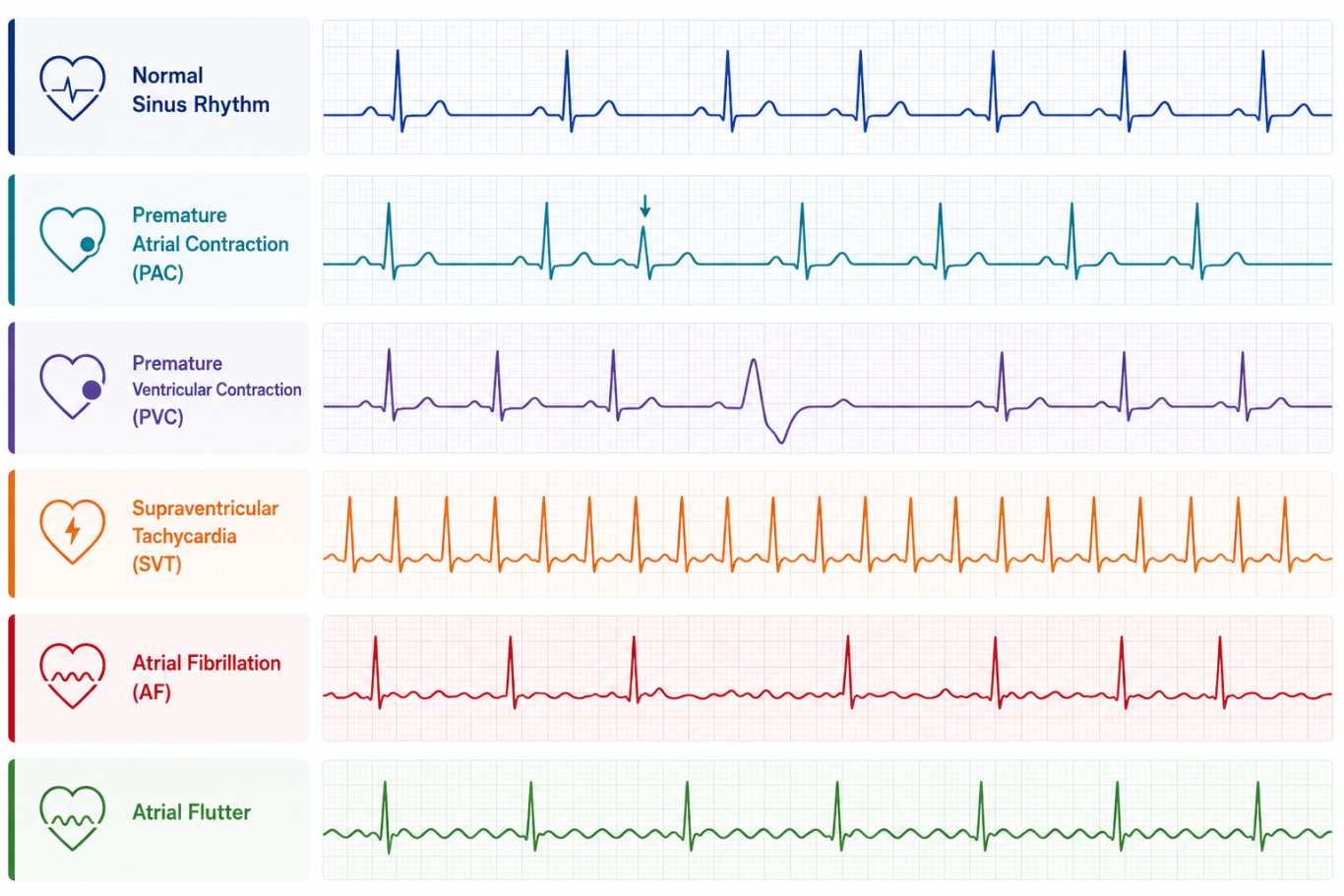
Different heart rhythms can produce different symptoms and ECG patterns. Investigations such as a Resting ECG or Holter Monitor can help determine the underlying cause of palpitations.
Symptoms Experienced
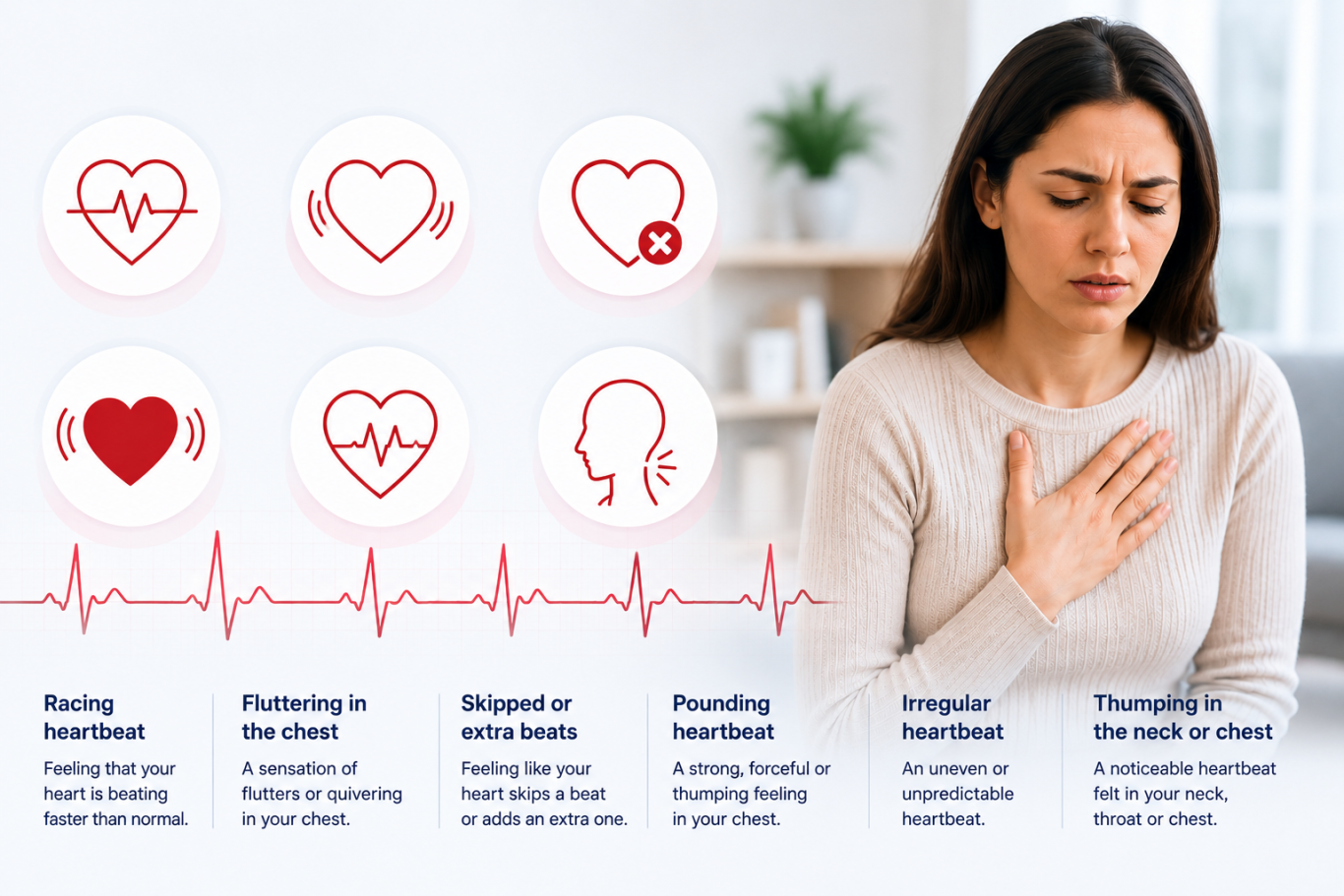
Heart palpitations can feel different from person to person. You may notice a racing heartbeat, a fluttering sensation in your chest, skipped or extra beats, or a forceful thumping that catches your attention. Some people experience an irregular heartbeat or feel their pulse pounding in their neck or throat.
Related Articles

What Does an Echocardiogram Show?
Learn how an echocardiogram assesses heart structure, valve function and pumping performance, and discover what clinicians look for during the examination.
What Is a Holter Monitor and When Do I Need One?
Find out how continuous ECG monitoring can help investigate intermittent symptoms such as palpitations, dizziness and unexplained blackouts.
Book your appointment today!
Fast, reliable cardiac testing with quick turnaround, available across London, Luton, Bedfordshire, Hertfordshire and Buckinghamshire.
The Heart Clinic @ Optimized Body & Mind
7 Wellington St, Luton, Bedfordshire, LU1 2QH, UK
Available for: ECG, Holter, ABPM & Echocardiograms
The Heart Clinic @ 360 Med
120 Fortis Green Rd, Muswell Hill, N10 3HN, London, UK
Available for: ECG, Holter, ABPM & Echocardiograms
Prefer to speak to us?
Email: info@theheartclinicltd.co.uk
Call: +447853 215671